
The Scapegoating of Hollywood’s ‘Ketamine Queen’
Jasveen Sangha from Essex is facing 65 years in prison in the US after supplying the ketamine that Matthew Perry took before he died. But there is more to this case than meets the eye.


The drug world throws up some weird stuff. But who could have predicted that a girl brought up in a wealthy Sikh family in suburban England would end up as a Hollywood dealer dubbed the “ketamine queen,” facing lengthy jail time for selling the drugs that killed Matthew Perry in his jacuzzi?
Last year Jasveen Sangha, 42, was arrested and charged with running a stash house from her north Hollywood apartment and supplying the ketamine taken by Perry before he drowned in his hot tub in 2023.
To federal prosecutors, the dual US and UK citizen was the “ketamine queen”, though perhaps it was not a nickname Sangha would have recognised herself, as it was a nickname only one customer had used. But for prosecutors it served a purpose, it gave Sangha the air of a master criminal. Consequently on every page of her indictment she is referred to as ‘Jasveen Sangha aka the “Ketamine Queen”’.
Unsurprisingly, Sangha’s barely used nickname has appeared in every headline about her case, including this one. Due to this, the fact she is a woman, and one whose photos are still up on Instagram, Sangha has got far more publicity than the other four people charged in connection with Perry’s death, who got bail, put together.
With her blingy photos, Sangha has been portrayed as the greedy, unscrupulous Hollywood drug peddler who, in between parties and hanging out with celebs, poisoned a vulnerable, beloved actor. But this is Narcomania, and the story of the “ketamine queen” is not as straightforward as US federal prosecutors and most of the media would have you think. One close friend of Sangha I was able to get hold of offers up a very different narrative to the one which has dominated the coverage of this case.
Sangha’s “gangster life” appears to have extended as far as a set of tongue in cheek, gangsta-lux photo shoots of her surrounded by fake dollar notes on Instagram, 1990s rave references, or her pimp-themed ‘Players Ball’ 40th birthday party in 2023.
Earlier this month, after a year in custody, Sangha appeared in a federal court in downtown Los Angeles in shackles and khaki prison jumpsuit to plead guilty to five of the original eight charges levelled at her, including maintaining a drug-involved premises, distributing ketamine, and distributing ketamine resulting in death.
Speaking outside the court, her lawyer, Mark Geragos, said Sangha had “always accepted responsibility”, but he accused prosecutors of “turning responsibility in this case on its head”.
“I think that most people, if you talk to them about this case, their biggest problem with it is why is she in custody and the [other defendants] whether it’s medical professionals or the people who are actually injecting the drug or the people who are administering the drug, are out.”
Asked by reporters if Sangha had any message for Perry’s family, he said: “Look, she feels horrible about all of this. I mean, nobody wants to be in the chain of causation, for lack of a better term. So, yes, she feels horrible and she’s felt horrible since day one.”
Sangha is due to be sentenced in December and faces a 65 years maximum prison term.
How did such an unlikely person end up a Hollywood drug hustler? And, more importantly, why is a party drug seller with no links to violence or gangsters facing the kind of heavy prison sentence most would associate with murderous organised criminals?
Jasveen Sangha was born Simrin Chhokar in east London in 1983. She spent the first four years of her life in Loughton, a well-off town just outside London in Essex, south east England. Her mother Nilem was the daughter of multi-millionaire clothing merchants originally from India who, according to the Times, lived in a big house in Essex and owned a Rolls Royce and a Ferrari. Her father was Baljeet Chhokar, a doctor from India, but the marriage was short-lived and Nilem married another doctor, Ajmel Sangha, and Simrin Chhokar became Jasveen Sangha.
In 1987, when Jasveen was four, a job came up for Ajmel in the US, so the family emigrated, moving in with Nilem’s uncle in Los Angeles. Nilem’s second marriage broke down, and with her third husband she set up a KFC franchise company called Tasty Birds Management. More salubriously, Jasveen went to high school in Calabasas, a wealthy neighbourhood made famous by the Kardashians, then won a place at the well-respected University of California, Irvine.

Jasveen and Nilem maintained a close bond to the UK, regularly returning to Essex to see Nilem’s parents, who threw a big party for Jasveen’s 21st birthday. In 2010 Jasveen temporarily moved to London, living in a Marylebone apartment while studying a business administration masters degree at Hult, an elite international business school. It was around this time that her parents’ franchise company was, according to the Daily Mail, successfully sued by KFC for $52,000 for not paying royalties.
Back in LA and armed with a business masters degree, Sangha set up a nail salon called Stiletto Nail Bar with a friend, but it failed and they were sued for non-payment of rent. No matter, Sangha had family money to burn and was living a glamorous life, wearing high-end designer clothes, going on bougie detoxes and flashy holidays and mixing it among LA’s money-soaked art and party scenes. Sangha started popping up at Oscar and Golden Globe events and ran an art and music promotion company, Jazzy Productions.

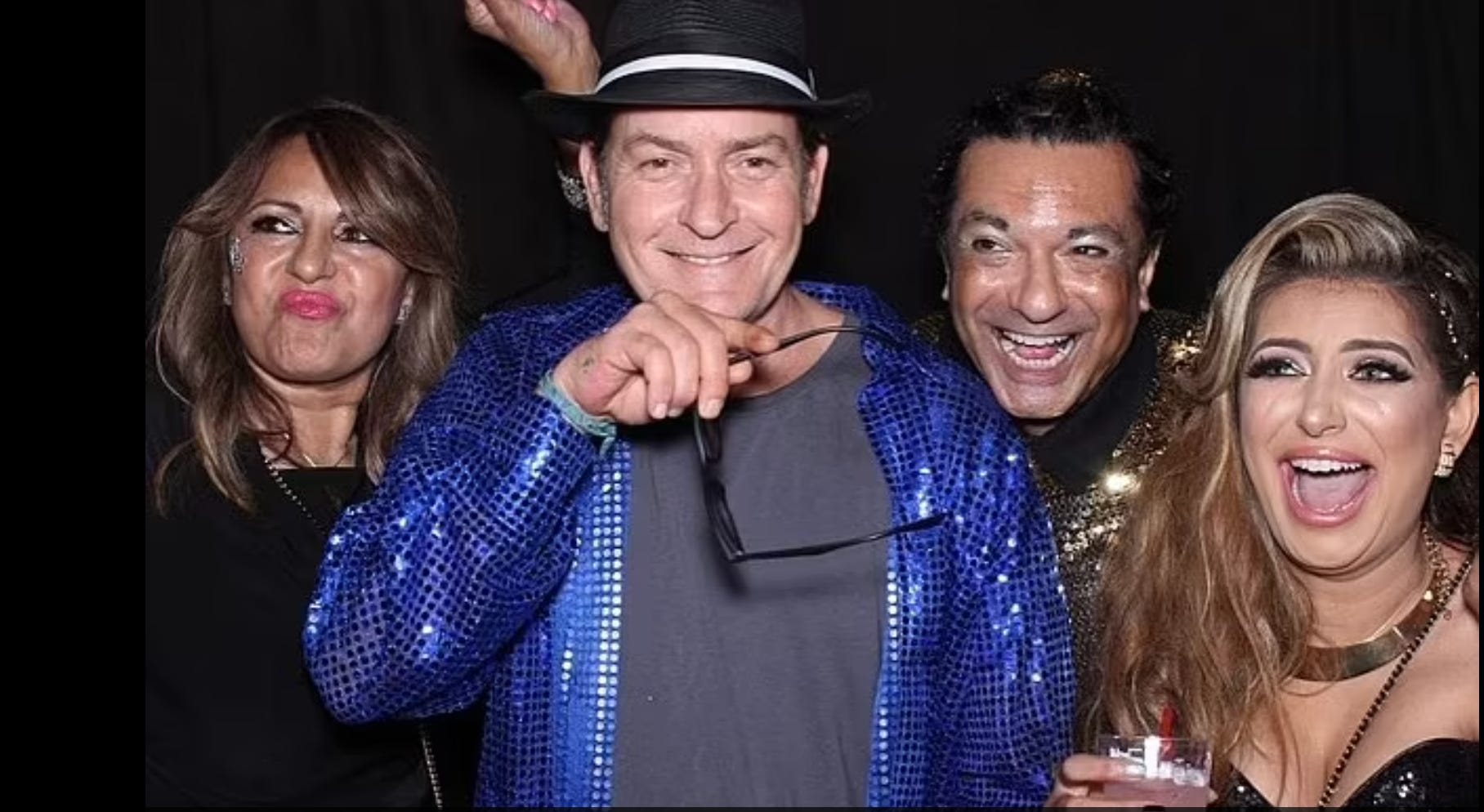
She became good pals with Perla Hudson, ex-wife of Slash from Guns N’ Roses. In one photo, they are pictured getting onto a private jet with those small dogs only rich people seem to own. In another photo, Sangha and her mother and uncle are with the actor Charlie Sheen.
In 2022, by this time in her late thirties, she had a series of professional, influencer-style photos taken of her, dripping in designer gear, quoting A$AP Rocky lyrics and shooting fake dollar notes out of some sort of money gun.

Life looked swinging for the girl from Essex. But the clock was ticking. Within days of her return back to LA, from a luxury holiday with her pals in Mexico, Sangha would be busted in connection with Perry’s death.
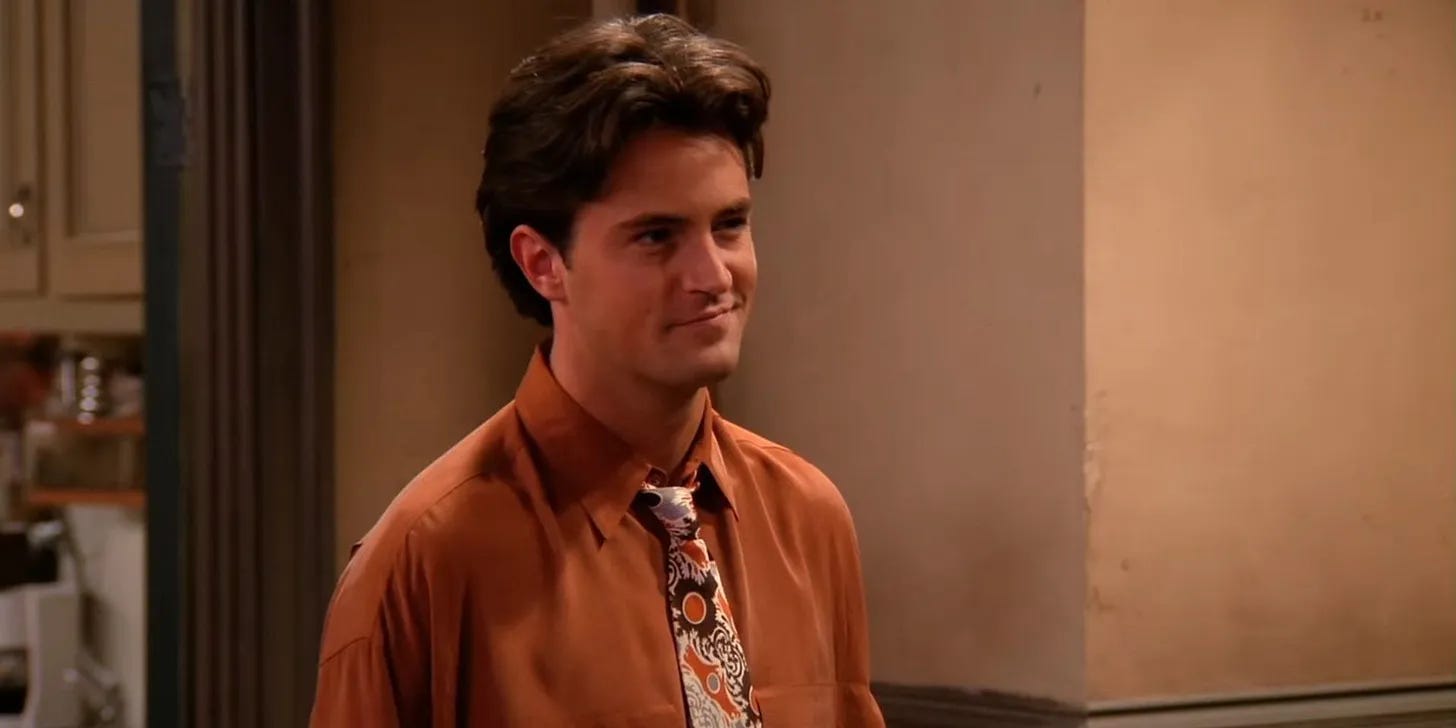
Best known as Chandler from Friends, Perry had been struggling with drug and alcohol addiction for decades. By September 2023 he had become addicted to the intravenous injection of ketamine, a drug increasingly used as both a recreational and a therapeutic drug in the US and Europe.
Perry liked to relax in his ocean view hot tub at his Pacific Palisades home after having large doses of the drug, administered by his personal assistant Kenneth Iwamasa. But on October 28 after being injected with three shots of liquid ketamine by Iwamasa, the actor was found lifeless, face down in the tub.
An autopsy report by the Los Angeles County Medical Examiner found Perry had taken enough ketamine to knock himself out. It said drowning, coronary artery disease and the effects of an opioid in his system had contributed to his death, with the primary cause as the “acute effects of ketamine”.
The subsequent police investigation found Iwamasa was one of five people, alongside two doctors, a middle man and Jasveen Sangha, involved in securing illicit ketamine supplies for Perry.
A police raid four months later on Sangha’s north Hollywood apartment in March 2024 found 79 vials of ketamine, approximately 1.4 kilograms of orange pills containing methamphetamine, alongside small amounts of magic mushrooms and cocaine.
To prosecutors, who alleged she had used her “drug selling emporium” to store, package and distribute narcotics between 2019 and 2024, her apartment was the ‘Sangha Stash House’. They said Sangha supplied in total 50 small vials of liquid ketamine to middle man Erik Fleming, a former actor and acquaintance of Perry, some of which was then used by Perry hours before his death. After his death was reported in the news, Sangha texted Fleming: ‘Delete all our messages’.
“These defendants cared more about profiting off of Mr. Perry than caring for his well-being,” said US attorney Martin Estrada in a press release. “Drug dealers selling dangerous substances are gambling with other people’s lives over greed. This case, along with our many other prosecutions of drug-dealers who cause death, send a clear message that we will hold drug-dealers accountable for the deaths they cause.”
To the public, Sangha has been framed as just another heartless, greedy drug dealer, with one report juxtaposing the image of Perry floating facedown in his hot tub with the suspect “indulging in afternoon tea at a five-star hotel in Japan and taking mirror selfies while modelling a kimono” or posting “highlights from a trip to Mexico where she enjoyed caviar at the airport, sitting poolside at the beach and admiring a drink within a coconut”.
But does Jasveen Sangha really deserve to take the blame for Perry’s tragic death, and to spend most of the rest of her life in prison for selling drugs on LA’s party scene? Is she the hellish woman that she’s being painted as?
This story of scapegoating is a familiar one.
Sangha stands accused of being a peddler of deadly drugs. But ketamine is very rarely deadly on its own. It’s a drug on the opposite scale of overdose risk to fentanyl. Of 228,668 drug overdose deaths in the US between 2019 and 2023, only 24 involved ketamine on its own. Almost always, ketamine is a contributing factor in deaths rather than people dying from direct toxicity. Those who die with ketamine in their system have most often taken other, more lethal drugs, or have died as a result of external factors such as losing consciousness in a bath, which is alarmingly common in ketamine-related deaths (life lesson: don’t take ketamine in a bath). Perry may not have died if he had not drowned.
Early on in the investigation into Sangha, prosecutors were convinced they would find multiple people who died after taking drugs she sold, predicting there were “likely more victims”. In the end they found one case, involving Cody McLaury, 33, a bar worker living in LA, who died after taking ketamine and other drugs in 2019.
Yet Perry’s unfortunate demise was far from being the case of a naive drug user targeted by an uncaring drug dealer.
The actor was a long term addicted drug user who was asking his assistant to pump him full of ketamine every day. By regularly taking large doses of ketamine before getting into water, Perry was walking down his own path to oblivion. His friends said as much. Perry’s former Friends co-star Jennifer Anniston told Vanity Fair after his death: “We did everything we could when we could. But it almost felt like we’d been mourning Matthew for a long time because his battle with that disease was a really hard one for him to fight. As hard as it was for all of us and for the fans, there’s a part of me that thinks this is better. I’m glad he’s out of that pain.”
That someone is addicted to drugs and is in a bad mental and physical state should not make their death any less tragic. But the narrative that Sangha was somehow preying on him, or supplying drugs he was unfamiliar with, does not hold true.
Prosecutors have found no evidence to show she either had close ties to street gangs or organised crime groups, or that she was involved in violence. Sangha’s “gangster life” appears to have extended as far as a set of tongue in cheek, gangsta-lux photo shoots of her surrounded by fake dollar notes on Instagram, 1990s rave references, or her pimp-themed ‘Players Ball’ 40th birthday party in 2023.
Nevertheless, prosecutors used her social media posts to make out she is borderline evil.
“The defendant posted a photo to social media wearing a bracelet with the word ‘MUSHY’ and several mushroom charms,” said a court prosecution document. “Notably, the defendant was arrested in March 2024 at the Sangha Stash Location with magic mushrooms.
“And on the photo, the defendant added text that reads: ‘Pulling out the old raver candy,’ and ‘#ravetothegrave,’ suggesting that she cannot be stopped and will persist in her drug lifestyle until death – a callous choice of words, considering that her actions have sent two victims to theirs.”
Ridiculous stuff.
The public and even family friends have also joined the pile-on.
Sangha’s old Instagram posts are littered with mocking insults from random people leaving comments since her arrest, such as ‘You’re going to burn in hell’, ‘Singapore has the right policy in executing drug dealers’ and ‘murderer’.
While her mother has stayed fiercely loyal, some of Sangha’s extended family appear to have turned on her. Sangha’s stepfather Ajmel told the Daily Mail “she is not my daughter”. Meanwhile an unnamed “family source” told the Times: “I think it was greed, status, attention. I don’t think we can see her as a victim in this. I have no sympathy for Jasveen at all, she’s an adult. It’s horrific what she’s done. Knowing Matthew Perry was an addict…being a part of that, providing the actual vials that killed him. It’s appalling.”
It’s all a bit Salem witch trials to me.
So it made sense, for the purpose of balance, to seek out someone who genuinely knew Sangha well, to ask them what she was like, and what they thought of the mess she had got herself in.
I tracked down a close friend of hers and I asked them how they saw the case against Sangha.
“His [Perry’s] lifelong struggle with addiction, long before this incident, is well documented. My heart goes out to his family. I know what it’s like to lose a loved one to drugs,” the friend told me. “But she never even met Matt Perry. He died from drowning, not ketamine.
“Her [proposed] sentencing is grossly unjust. And I can’t help but to notice the hypocrisy in a brown woman being locked up because of the actions of a famous, white male celebrity – towards himself. Oh, and I never once heard her referred to as the Ketamine Queen, until a news station said it.”
I asked whether Sangha was the callous, greedy person portrayed by the authorities and the media.
“She looked out for me when I was at my lowest living in DTLA [downtown LA]. She saw I was surrounded by tragedy and in grief because of it. So she convinced me to move and facilitated the process, since I was unable to get it done myself, and I am forever grateful to her for that,” said the friend. “She likes to have fun with her friends, and is extremely family-oriented. She’s a tremendously sweet, caring, and giving person.”
Sangha’s projected punishment mirrors that given to rapists and murderers, and vastly overestimates her threat to society. Her case is part of a renewed push by US authorities, notorious for harsh drug offence penalties since the 1970s, who have used the opioid crisis to boost the punishment for drug sellers. Many state and federal prosecutors are now pursuing so-called ‘death by dealer’ or ‘drug-induced homicide’ laws, whereby people who pass on drugs that end up playing a part in someone’s overdose, even if they are friends, are treated like killers.
People who sell drugs have long been demonised as modern day folk devils: who push drugs on others, who lure innocent victims into addiction. But in the real world, and I’ve spoken to enough of them, this is not what people who sell drugs are necessarily like.
What Sangha’s tale starkly reveals is that the business of illegal drug selling attracts all types, even Sikh girls from wealthy British families who are the daughters of doctors. The same goes for people who use illegal drugs and who become addicted to them, they come from all walks of life, all with their own motivations. But treating any of them as somehow less than human gets us nowhere.
Just like police or politicians for example, people who sell drugs are not all cut from the same cloth. But who cares if drug sellers are useful scapegoats for the ills of society – especially the unaddressed problems that drive people to addiction or into a dealing career.
Whatever sentence Sangha receives, America will breathe a second-long sigh of relief. Because justice will have been seen to be done: another despicable drug dealer will have got their just desserts, and the criminal justice system can tick off another success. But it will solve nothing.
RIP Matthew Perry.
This is great !
Very interesting. Has echoes of the media coverage around Amanda Knox